Website or Mobile App First? How to Decide for Your Business
Decide whether a website or app is best for your business first. Get expert advice on choosing between mobile apps, PWAs, or traditional websites.
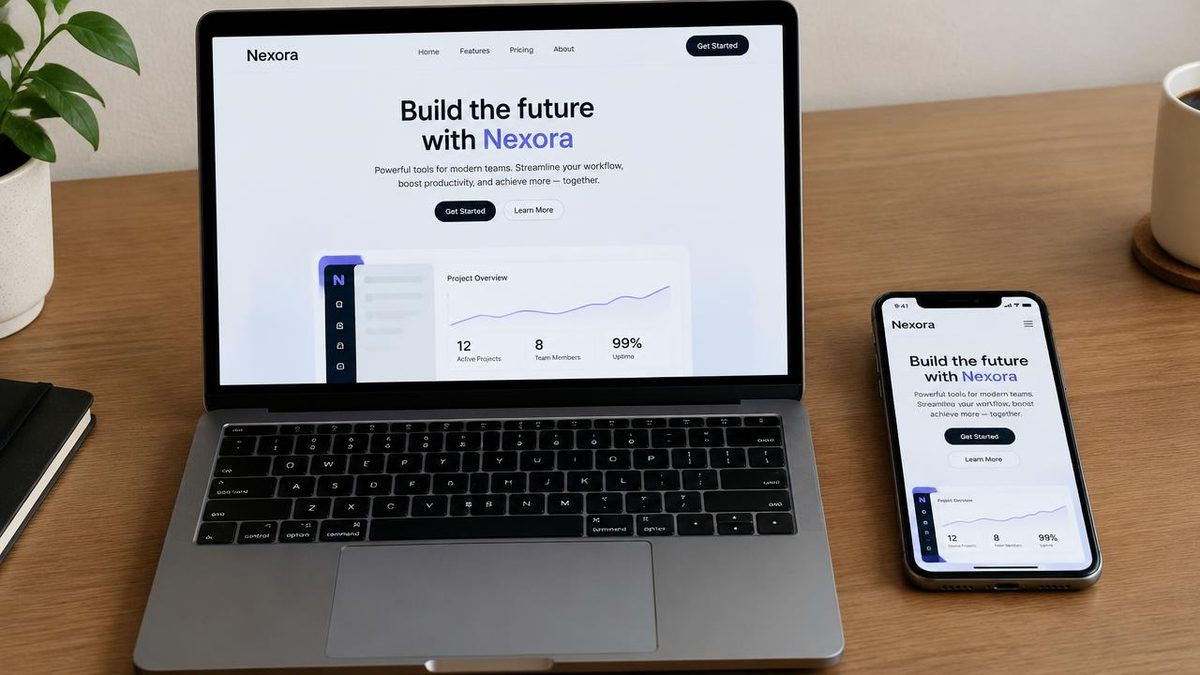
It’s one of the most common and critical questions we hear from entrepreneurs and established business owners alike: "Should I build a website or a mobile app first?" This decision isn't just a technical one; it's a strategic choice that impacts your budget, your marketing efforts, and how you connect with your customers. In a digital landscape where presence is paramount, choosing the wrong first step can be a costly mistake.
The answer, as with most things in business, is: it depends. There is no one-size-fits-all solution. The right path for a new local restaurant is vastly different from that of a global fintech startup. With over a decade of experience in software and business strategy, our team at ZK Solutions has guided countless clients through this decision-making process. This article will provide a clear, practical framework to help you determine whether a website, a mobile app, or perhaps a different approach altogether, is the right launchpad for your business.
The Case for "Website First"
For the vast majority of new and growing businesses, a website is the foundational cornerstone of their digital identity. It is your central hub, your 24/7 salesperson, and your primary credibility builder. Here’s why starting with a website is often the most strategic move.
First and foremost is reach and accessibility. A website is universally accessible through a browser on any internet-connected device—desktops, laptops, tablets, and smartphones. Users don't need to download anything or visit an app store. They just need to type in your address or find you on Google. This frictionless access is crucial for attracting the widest possible audience.
This leads to the second major advantage: discoverability. Websites are the lifeblood of Search Engine Optimization (SEO). Search engines index your website's pages, allowing potential customers to find you when they search for the products, services, or information you provide. Without a website, you are virtually invisible to the billions of searches happening every day.
Third, building a website is typically more cost-effective and faster than developing a native mobile app. A professional, responsive website can often be designed and launched in a fraction of the time and budget required to build, test, and deploy separate apps for iOS and Android. This allows you to establish your online presence quickly and start generating leads or sales sooner. At ZK Solutions, we've even pioneered AI-powered tools like ZAMA, our AI web developer, to streamline this process further for certain use cases.
A website serves as the definitive information hub for your brand. It’s where you can house everything from detailed service descriptions and product catalogs to blog articles, company history, case studies, and contact information. It provides the space you need to tell your full story and build trust with your audience.
When to Prioritize a Mobile App
While a website is the default starting point for many, there are specific scenarios where leading with a business app is the smarter strategic decision. This choice is usually driven by a need for deeper user engagement and specialized functionality.
The primary reason to build an app is to provide a superior and highly specialized user experience (UX). Mobile apps are designed specifically for the mobile environment, offering faster performance, smoother animations, and a more intuitive interface than a mobile browser can typically provide. If your service requires complex interactions or data manipulation, an app can deliver a far less frustrating experience for the end-user.
A key differentiator for a business app is its ability to access a phone's native features. If your business model relies on the user's camera (like an ID scanner), GPS (for delivery or navigation), accelerometer (for fitness tracking), or contacts, a native app is not just an option—it's a necessity. Websites have limited access to this hardware.
Perhaps the most powerful feature of a mobile app is the push notification. This allows you to send targeted messages directly to a user's phone, even when they aren't actively using the app. For re-engagement, this tool is unmatched. You can alert users to a flash sale, a new message, a relevant update, or simply remind them to use your service. This direct line of communication is invaluable for building habits and customer loyalty.
Finally, apps are king when it comes to offline access and fostering regular use. If your users need to access information or perform tasks without a stable internet connection, an app can be designed to store data locally. Furthermore, the simple act of having your brand's icon on a user's home screen is a powerful form of marketing, encouraging frequent, habitual interaction that a bookmark in a browser can't replicate.
The "Why Not Both?" Approach: Introducing Progressive Web Apps (PWAs)
The "website or app" debate often presents a false dichotomy. In many cases, a hybrid solution offers the best of both worlds. This is where the Progressive Web App, or PWA, comes in. A PWA is an advanced website that incorporates many of the best features of a native mobile app.
In simple terms, a PWA is delivered through the web but is designed to look, feel, and behave like an app. Users can "install" a PWA to their home screen with a single tap, creating an icon just like a native app. It can load instantly, work offline or on low-quality networks, and—most importantly—can send push notifications to re-engage users.
The benefits are compelling. You get the discoverability and universal reach of a website, as it's still fundamentally a web page with a URL that search engines can index. However, you also get the app-like experience and engagement tools that drive retention. Development is also more streamlined; instead of building and maintaining separate codebases for a website, an iOS app, and an Android app, you maintain a single PWA codebase. This can significantly reduce development and maintenance costs.
PWAs are an excellent choice for e-commerce businesses wanting to improve mobile conversions, news publishers aiming for repeat readership, and service platforms that want app-like functionality without forcing users through an app store download process. As a firm that champions efficient and effective technology, ZK Solutions frequently recommends PWAs to clients who need that perfect balance of reach and engagement.
A Strategic Framework for Your Decision
To make the right choice for your business, you need to step back from the technology and focus on your strategy. Ask yourself these four critical questions:
1. What is your primary business objective?
Is your main goal to build brand awareness and generate leads? A content-rich, SEO-optimized website is your best bet. Is your goal to foster daily interaction and provide a complex service tool? A native business app might be necessary. Are you trying to sell products to a wide audience with a smooth mobile experience? A PWA could be the ideal solution.
2. Who is your target audience and how will they find you?
Think about your customer's journey. Will they discover you by searching for a solution on Google? If so, SEO is critical, and a website must be your priority. Are you targeting a specific niche community where you can promote an app directly? How tech-savvy are they? Understanding their behavior is key.
3. What specific features are essential for your service to function?
Make a list of non-negotiable features. If "access phone camera" or "use GPS for background tracking" is on that list, you are likely leaning toward a native app. If your core features are information delivery, form submissions, and online purchasing, a responsive website or PWA can handle that perfectly.
4. What is your realistic budget and timeline?
Be honest about your resources. A well-made website is a better investment than a poorly made, buggy app. It's often strategic to launch a high-quality website or PWA first to validate your market and generate revenue, which can then fund the development of a native app later on as part of a phase-two strategy.
Frequently asked questions
### Is an app more expensive than a website?
Yes, in almost all cases. A native mobile app requires separate development projects for Apple's iOS and Google's Android platforms. Each has its own programming language, design guidelines, and testing requirements. You also have to navigate the app store submission and review processes. A responsive website is a single project that works across all platforms, making it inherently more cost-effective to build and maintain.
### Can't I just have a mobile-friendly website instead of an app?
Absolutely, and you should. A responsive, mobile-friendly website is no longer optional—it's a requirement for modern business. The real question is whether you *also* need a native app on top of that. If your business can thrive without needing access to a phone's specific hardware or the powerful re-engagement of push notifications, a well-designed mobile website or PWA is often sufficient.
### What is the biggest mistake businesses make when choosing between a website or app?
The biggest mistake is chasing trends without a clear business case. Many businesses build a business app simply because they feel they "should" or because a competitor has one, without a strategy for user acquisition or a clear understanding of how the app will generate a return on investment. An app without users is just expensive code. The decision must be driven by your unique customer needs and business goals.
### How long does it take to build a business app?
The timeline varies dramatically based on complexity. A simple app with basic features might take 3 to 5 months from conception to launch. However, a complex application with custom UI, a sophisticated backend, third-party integrations, and robust security features could easily take 8 to 12 months or even longer. At ZK Solutions, we often advocate for a Minimum Viable Product (MVP) approach to launch core features faster and iterate based on user feedback.
The "website or app" dilemma is less about picking a winner and more about choosing the right tool for the job at hand. Your first step in the digital world should be a strategic one, aligned with your budget, goals, and customer expectations. By carefully considering your objectives, you can invest your resources wisely and build a foundation for long-term growth.
Feeling unsure about the right path for your digital strategy? Let's talk. Contact ZK Solutions today via WhatsApp or our website contact form for an expert consultation tailored to your business.
Mobile App Development Company — Android & iOS
Android and iOS apps with clean design, reliable backends and a clear path from idea to app-store launch.
Need help with this?
ZK Solutions handles software, AI, marketing, China sourcing and freight — first consultation is free.
Talk to ZK Solutions