What Is Freight Forwarding? A China to Pakistan Guide for Importers
Get expert freight forwarding from China to Pakistan. This clear guide helps importers navigate cargo shipping efficiently with a trusted shipping agent.
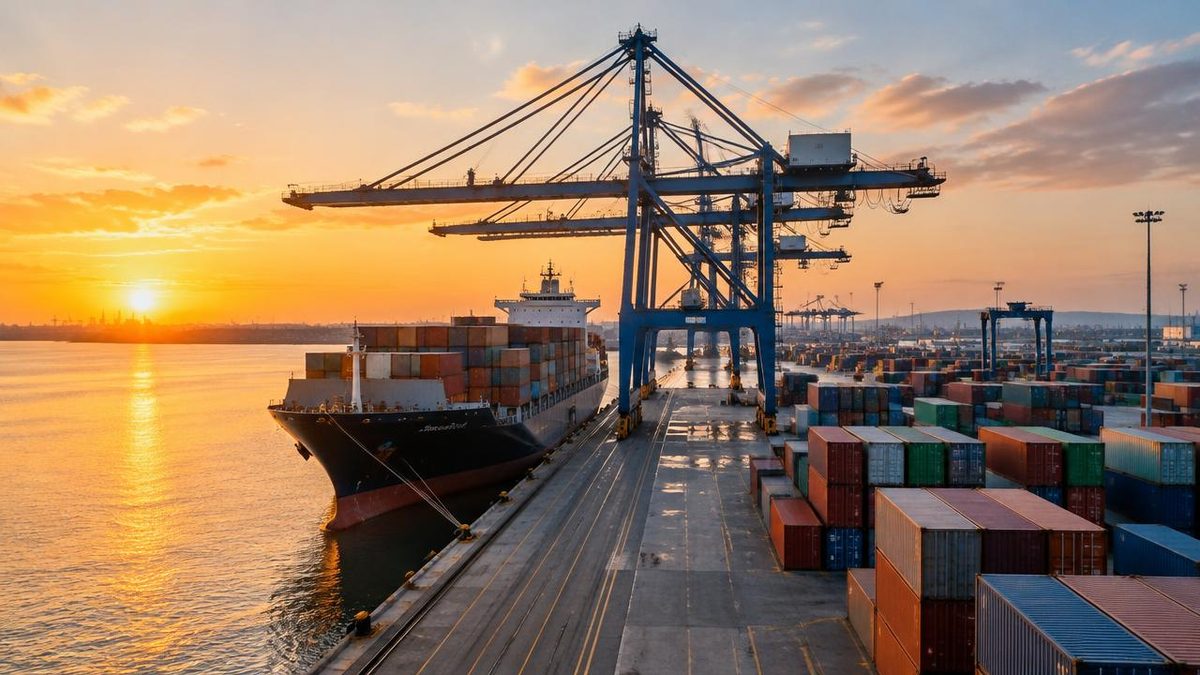
The Chinese market represents a massive opportunity for Pakistani importers, offering everything from consumer electronics and machinery to textiles and raw materials. However, the journey your goods take from a factory in Shenzhen to your warehouse in Lahore is a complex logistical puzzle. This is where freight forwarding comes in. Navigating this process efficiently can be the difference between a profitable venture and one bogged down by delays, unexpected costs, and customs headaches.
As a company deeply rooted in international trade for over a decade, ZK Solutions has managed this exact supply chain for countless businesses. Our CEO, Muhammad Zain, built his expertise on the ground, understanding the nuances of sourcing, shipping, and customs clearance between China and Pakistan. This guide distills that experience into a clear, actionable roadmap for importers.
What a Freight Forwarder Actually Does
Many businesses mistakenly think of a freight forwarder as just a delivery service. In reality, a good freight forwarder or shipping agent is your logistics architect. They don't typically own the ships or planes but act as an intermediary, leveraging their network and expertise to plan and execute the most efficient, cost-effective, and reliable transportation of your cargo.
Their responsibilities include:
- Advising on the best shipping mode (sea, air, etc.).
- Booking space with carriers for your cargo.
- Arranging pickup from the supplier in China and delivery to your door in Pakistan.
- Preparing and processing all necessary documentation for export and import.
- Handling customs clearance on both ends.
- Providing cargo insurance and tracking.
Essentially, a competent shipping agent takes the entire logistical burden off your shoulders, allowing you to focus on running your business.
Key Shipping Methods: Sea vs. Air Freight
When shipping from China to Pakistan, you have two primary options, each with distinct advantages and disadvantages.
Sea Freight: The Workhorse of Global Trade
This is the most common and economical method for shipping commercial goods. Transit times from major Chinese ports (like Shanghai, Ningbo, or Shenzhen) to Karachi can range from 20 to 35 days, depending on the carrier and service type.
- **Full Container Load (FCL):** You rent an entire container (20ft or 40ft). This is ideal if you have enough cargo to fill most of a container. It's more secure as your goods are not mixed with others and is often faster than LCL once at the port, as the entire container is handled as a single unit.
- **Less than Container Load (LCL):** If you don't have enough cargo to fill a container, you can share space with other importers. Your goods are consolidated with others at a warehouse in China and de-consolidated in Pakistan. LCL is highly cost-effective for smaller shipments but can have slightly longer transit times due to the extra handling steps.
Air Freight: The Express Route
When speed is your priority, air freight is the answer. Cargo can travel from a major airport in China to Pakistan in just 3 to 7 days, including customs clearance. However, this speed comes at a significantly higher cost.
Air freight is best for:
- High-value goods where the cost of shipping is a small percentage of the product's value.
- Time-sensitive items, such as seasonal products or urgent replacement parts.
- Perishable goods.
- Lightweight and small-volume shipments where the cost difference compared to LCL sea freight is minimal.
A professional freight forwarder will help you perform a cost-benefit analysis to determine which method makes the most sense for your specific shipment.
The China-to-Pakistan Shipping Process, Step by Step
Understanding the journey your cargo takes can help you appreciate the value a skilled shipping agent provides.
- **Supplier Coordination & Cargo Pickup:** The process begins in China. Your freight forwarder coordinates with your supplier to arrange a pickup time once the goods are manufactured and packed.
- **Export Clearance in China:** Your cargo is transported to the port or airport of departure. Here, your agent handles all Chinese export customs formalities. This involves submitting crucial documents like the commercial invoice, packing list, and bill of lading (for sea) or air waybill (for air). Errors here can cause significant delays.
- **Ocean or Air Transit:** The cargo is loaded onto the vessel or aircraft and begins its journey to Pakistan. During this time, your agent should provide you with tracking information so you can monitor its progress.
4. **Arrival and Import Customs Clearance in Pakistan:** This is often the most challenging stage for importers. Upon arrival at the port of Karachi or a major airport, the cargo must be cleared through Pakistan Customs. This involves: - Filing a Goods Declaration (GD). - Correct classification of goods under the HS code system. - Accurate calculation and payment of customs duties, sales tax, income tax, and other potential regulatory duties. - Physical inspection, if required by customs officials.
An experienced partner like ZK Solutions is invaluable here, ensuring all paperwork is correct and processes are followed to avoid costly delays, fines, or demurrage charges.
- **Final Delivery:** Once cleared, your agent arranges for the cargo to be picked up from the port or airport and delivered by truck to your warehouse or final destination anywhere in Pakistan.
An Anonymous Success Story: From Chaos to Control
A mid-sized electronics importer based in Lahore was facing major challenges with their supply chain from Shenzhen. They used a different agent and constantly battled unpredictable transit times, surprise "handling fees," and lengthy customs delays at the port. Their inability to forecast inventory arrival was hurting sales.
They approached ZK Solutions for a consultation. Our team performed a complete audit of their logistics. We identified that their multiple small LCL shipments were being poorly consolidated, leading to inefficiencies. Our approach was to establish a fixed weekly consolidation plan in Shenzhen, liaising directly with their three main suppliers. We prepared all import documentation well before the vessel arrived in Karachi, pre-empting potential customs queries. The outcome was transformative. The client's total landed cost per unit dropped by over 12% by eliminating demurrage and unexpected fees. More importantly, their delivery schedule became predictable, allowing them to manage stock levels and marketing campaigns with confidence.
Frequently asked questions
When should I choose air freight over sea freight?
Choose air freight when the cost of delay outweighs the cost of shipping. This applies to high-value electronics where market prices can change quickly, urgent spare parts needed to prevent a production stoppage, or samples for a critical client meeting. For most bulk commercial goods where you can plan inventory weeks or months in advance, sea freight is the more economical and logical choice.
What are the essential documents needed for importing from China?
At a minimum, you will need a Commercial Invoice (detailing the goods and their value), a Packing List (detailing the contents, weight, and dimensions of each package), and a Bill of Lading (for sea freight) or Air Waybill (for air freight). Depending on the product, you may also need a Certificate of Origin, import licenses, or specific compliance certificates required by Pakistani authorities. Your freight forwarding agent will guide you on the exact requirements for your cargo.
How are freight costs calculated?
For sea freight, costs are often based on the container type (FCL) or on a "per cubic meter" (CBM) or "per ton" basis for LCL, whichever is greater. For air freight, cost is determined by chargeable weight. Carriers calculate both the actual gross weight of the shipment and its volumetric weight (based on its dimensions). They will charge based on whichever of the two is higher. This is why efficient packing is crucial to avoid paying for empty space.
For expert guidance and a seamless freight forwarding experience from China to Pakistan, trust a partner with proven trade expertise. To discuss your specific cargo needs and get a transparent quote, contact ZK Solutions today via WhatsApp at 03106175535 or by using the contact form on our website.
Freight Forwarding Services — Sea, Air & Door-to-Door
Sea, air and door-to-door cargo managed end-to-end, with clear updates from pickup to delivery.
Need help with this?
ZK Solutions handles software, AI, marketing, China sourcing and freight — first consultation is free.
Talk to ZK Solutions